

Proper acclimatization is a key factor in reaching the summit of Mount Everest. After having been at Everest Base Camp (EBC) for quite some time, moving to higher elevations was overdue. If done at an adequate pace, moving to higher camps allows the body to adjust to the reduced availability of oxygen without too many negative side effects.
On April 19, we climbed to camp 1, right above the ice fall.
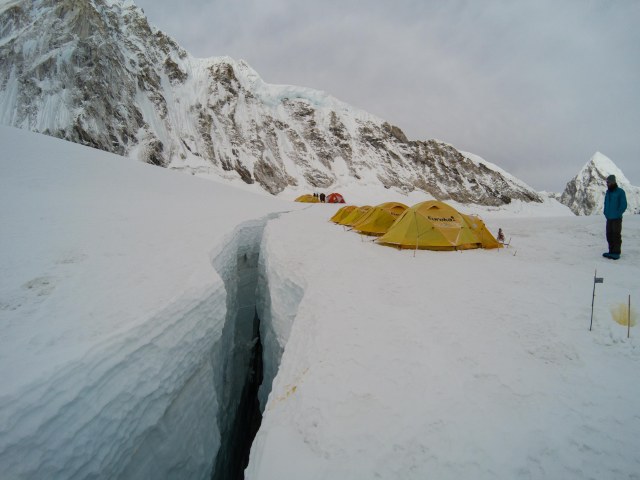
Camp 1 is a relatively insignificant camp, mainly used to allow climbers to acclimatize. It’s located slightly below 20,000ft (6,000m), an altitude that is perfect for further acclimatization when coming from EBC. We spent two days at camp 1, doing essentially nothing, aside from short hikes and soaking in the sun.
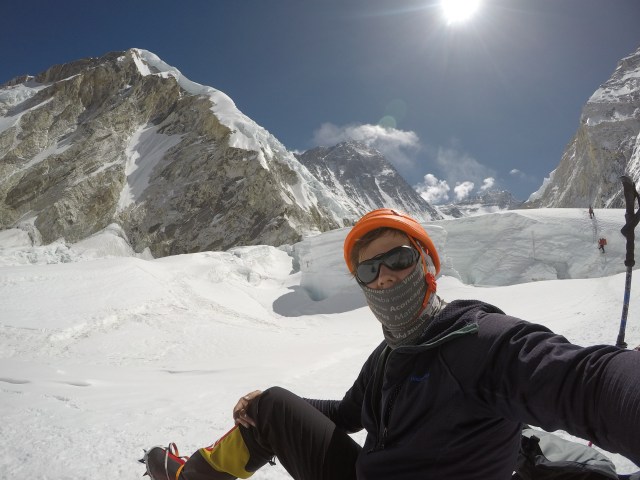
On April 21, we moved on to camp 2, a set of tents in a desolate-looking area of rock and ice.
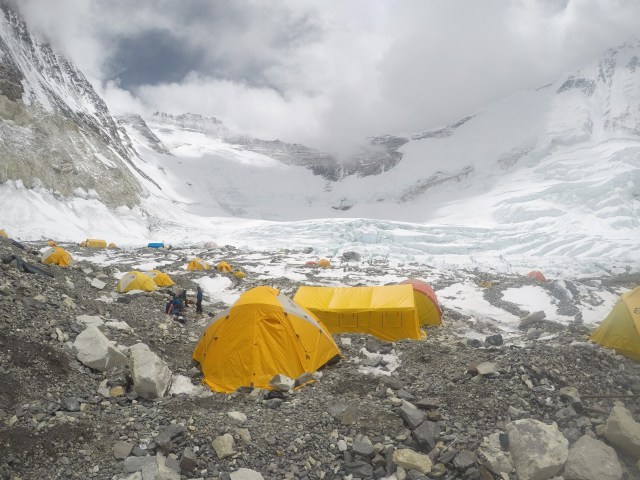
Camp 2 feels like the last camp that is still somewhat “livable”. It’s located at about 21,000ft (6400m), with little, although sufficient, oxygen to breathe. Our intention was to spend another two days at camp 2, but we were trapped for an additional day because the route back to EBC was destroyed by falling ice.
Below are two video clips, showing my return climb through the ice fall.
[Descending from camp 2 – mostly flat terrain but occasional giant crevasses to be crossed]
[A constantly moving maze of blocks of ice – better not to spend too much time here]
 Markus Takes On Everest